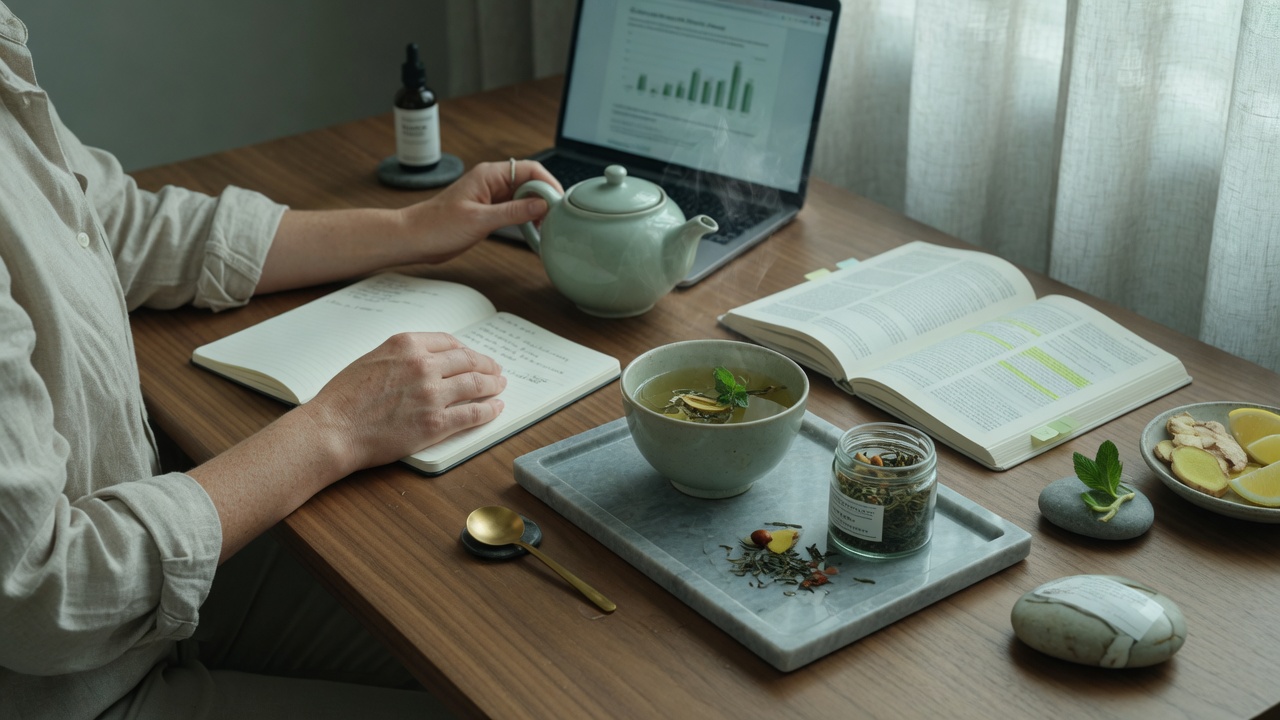
green tea anti inflammatory
Green Tea Anti Inflammatory After 40: A Busy-Adult Desk Guide
Green tea anti inflammatory basics for busy adults over 40—one lunch-break window, what to skip, who should wait, and when a structured smoothie plan fits.
Short answer (for busy adults over 40)
Green tea anti inflammatory interest usually means one practical question: can a simple green-tea habit support a calmer, more consistent routine when you already work a full day and do not have time for complicated “protocols”?
For many adults over 40, brewed green tea is a reasonable, low-drama way to add plant compounds (including catechins) people commonly discuss in the inflammation and metabolic-health conversation. It is not a miracle, not a guaranteed fat-loss switch, and not a timeline promise.
What ranking pages often miss: a single busy-adult constraint record—one real window (here: the lunch break), what to leave out, who should not force it, and a clear caffeine cutoff—so the habit survives a desk job instead of collapsing by Wednesday.
| At a glance | This page |
|---|---|
| What it answers | How to use green tea’s anti-inflammatory angle in one realistic desk window after 40 |
| What it is not | A disease treatment guide, extract mega-dose plan, or overnight weight-loss claim |
| Who should wait | Pregnancy, clinician-managed meds, disordered-eating history, under 18, stimulant/sleep issues, or anyone expecting guaranteed fat loss |
What “green tea anti inflammatory” actually means at a desk
People search this phrase because they want a food-first lever that feels calmer than another extreme diet. Green tea is widely discussed for catechins (including EGCG in popular nutrition writing) and for being a lower-calorie drink swap versus sugary beverages.
For a 40+ desk schedule, the useful framing is:
- Habit reliability beats exotic prep.
- Caffeine + sleep matter as much as the leaf.
- Inflammation talk ≠ diagnosing inflammation. If you have pain, autoimmune concerns, or unexplained symptoms, that is clinician territory—not a tea page.
- Weight management (if that is also your goal) still depends on overall pattern: protein, produce, movement you will repeat, and a plan you can keep on workdays.
Brewed tea, matcha, bottled “diet green tea,” and capsules are not interchangeable in dose, caffeine, or stomach feel. This page stays on the brewed / smoothie-friendly path most compatible with a lunch break.
The limit
One situation only: a 15-minute lunch break on a day-shift desk job (microwave, kettle, or office hot water—no full kitchen reset).
In that window you can realistically:
- Heat water
- Steep a bag or pre-portioned loose tea or blend a simple green-tea + produce smoothie if you prepped ingredients the night before
- Drink while you eat a protein-forward plate or the rest of the smoothie
- Log nothing fancier than “did it / skipped it”
If your only free block is before bed, this page’s green-tea habit does not belong there for most caffeine-sensitive adults over 40 (see cutoff below). Night-shift workers should treat “lunch” as their mid-shift meal and still respect personal sleep timing.
What to skip
In that same 15-minute lunch window, leave these out:
- Multi-step ceremonies (whisking rituals, temperature apps, 20-minute steeps, plating for social media). They fail on real desks.
- Stacking high-dose green tea extract capsules “on top of” strong brewed tea in the same hour without clinician input—more is not automatically better, and concentrated extracts are a different risk profile than a cup of tea.
- Sweet bottled “diet green tea” as the whole strategy if sugar or artificial sweetener patterns work against your energy and appetite goals.
- Turning tea into a punishment cleanse (skipping lunch protein, under-eating, or chasing a scale miracle by Friday).
Skip list is about protecting the window, not moralizing beverages.
Who should not
Educational filter—not a prescription. Do not use this page (or any tea/smoothie plan) as treatment.
Who should not push a green-tea anti-inflammatory habit—or a structured meal-replacement-style program—without personalized medical guidance:
- Pregnant or nursing people (caffeine and diet pattern need clinician guidance)
- Anyone on medications a clinician should review with caffeine, vitamin K patterns, blood thinners, blood-pressure drugs, stimulants, or other interactions
- People with a history of disordered eating, or who feel pulled toward rigid “only liquids” rules
- Under 18
- Adults with stimulant limits: anxiety, panic, reflux flares, arrhythmia concerns, or sleep already fragile
- Anyone seeking a product that diagnoses, treats, cures, or prevents disease—this page and the offer category do not do that
If your goal is medical inflammation management, ask your clinician first. Tea is a beverage habit, not a care plan.
Cited cutoff
Public source: The U.S. Food and Drug Administration states that 400 milligrams of caffeine per day is an amount not generally associated with dangerous, negative effects for healthy adults (FDA consumer caffeine guidance).
This page’s scheduling rule (not a clinical result): No green tea in the 8 hours before your target bedtime on work nights—call it a sleep-protection cutoff for busy adults over 40, not a lab finding. If you are sensitive, tighten to 10 hours or switch the lunch drink to decaf green tea / herbal options your clinician is fine with.
Does Smoothie Diet “fit” this 15-minute lunch window?
Partially, as a structured multi-day food framework—not as a green-tea extract product. The Smoothie Diet is positioned as a 21-day structured smoothie schedule for healthy weight management and consistency, not as an anti-inflammatory drug or a pure tea protocol. If your lunch break can hold a pre-planned smoothie (ingredients ready), a program like that can fit the time box. If you only wanted a single cup of tea and no plan changes, you do not need the program—brew the tea and stop there. Fit beats force.
A practical 5-step framework for green tea anti inflammatory goals after 40
Use this as a desk-friendly system—not a detox script.
1) Define the job in one sentence
Example: “I want a calm midday drink habit that replaces a second sweetened beverage and supports consistency while I work on weight management.”2) Choose one delivery form for 21 days
- Brewed bag/loose tea (simplest)
- Smoothie that can include cooled green tea as liquid (if texture and stomach tolerate it)
- Avoid hopping between extract, energy shots, and sweet bottles every other day
FAQ
How long until I notice anything?
Results vary. Track energy and bloating for 7–14 days.Is a structured plan required?
No. Start with habits; evaluate a plan only if chaos continues.More in Tea, juice & bloating after 40
Full topic hub →- Best Tea for Water Weight: What Helps and What to SkipNo tea flushes out water weight. What the NHS and NIH say about green, dandelion, liquorice and senna teas, and what actually eases fluid build-up.
- Protein Smoothie Without Protein Powder: 4 Recipes, 28-36 GramsFour protein smoothies made with yogurt, milk, tofu, and seeds instead of powder, with a table of which foods add the most protein, from USDA data.
- Best Tea for Weight Loss at Night After 40: A Calm, Practical GuideBest tea for weight loss at night after 40—sleep-safe picks, timing rules, and a simple desk-to-bed routine. Not a miracle; see who should wait.
- Palo Azul Tea Benefits After 40: What Busy Adults Should KnowPalo azul tea benefits for busy adults over 40—traditional uses, realistic limits, a desk-friendly brew framework, who should wait, and when a structured smoothie plan fits better.