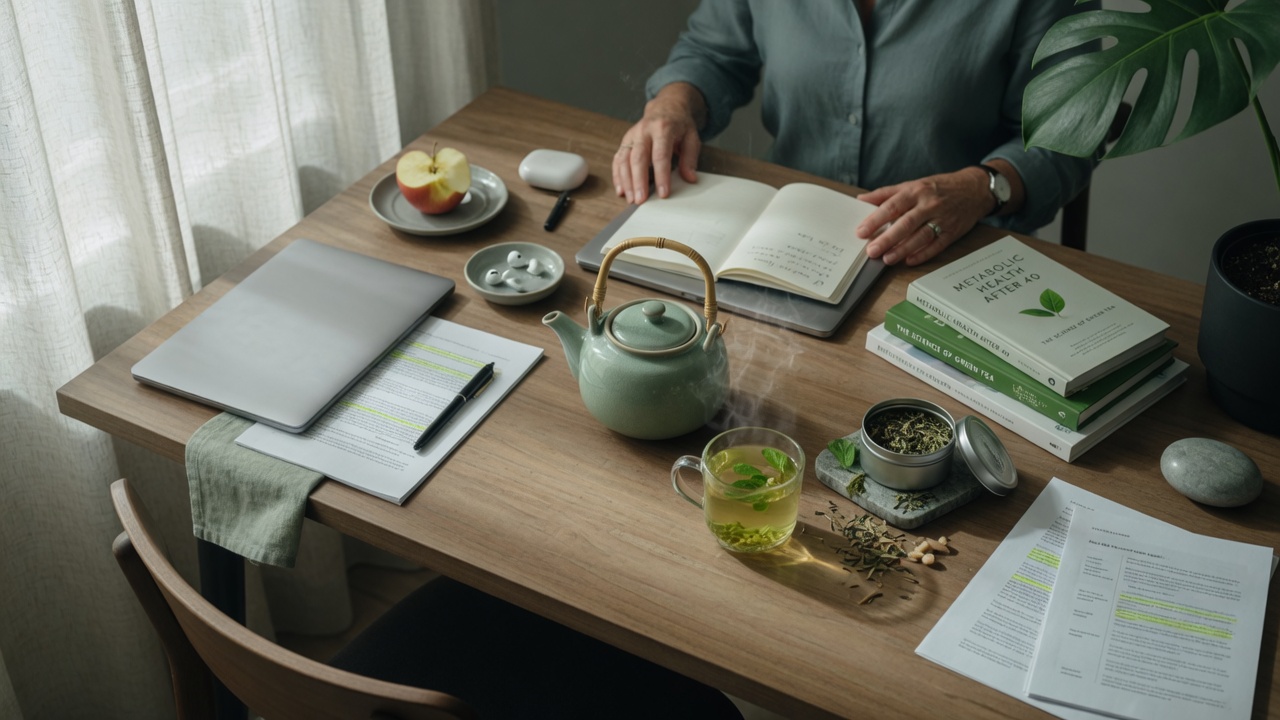
best green tea for weight loss
Best Green Tea for Weight Loss: Which Type to Buy
Which green tea is best for weight loss? What NIH and Cochrane found, how brewed, matcha, decaf, and bottled teas compare, and which products to skip.
Short answer
The best green tea for weight loss is plain, unsweetened green tea that you brew yourself from leaves or tea bags, in whichever variety you enjoy enough to drink regularly. No brand has been shown to work better than another, and no health authority ranks brands. The honest size of the effect is small: the NIH says green tea "may have a modest effect on body weight," and a Cochrane review judged the weight change too small to matter clinically.
So the useful question is less "which brand" and more "which kind of product." Brewed tea, matcha, decaf, flavored tea, bottled tea, "slimming" tea blends, and extract capsules are very different things. This page goes through each using public sources. We have not tested any tea brand and do not name any.
What the evidence says about green tea and weight
- NIH (NCCIH). The catechins and caffeine in green tea and its extracts may have a modest effect on body weight, and the effect may vary with the product and with how active the person is.
- NIH Office of Dietary Supplements. Its fact sheet for health professionals concludes that if green tea is an effective weight-loss aid, any effect is small and not likely to be clinically relevant. Its consumer sheet says green tea might help you lose a small amount of weight.
- Cochrane review (2012). In the six trials run outside Japan, the difference between green tea preparations and placebo was 0.04 kg, which was not statistically significant. The authors concluded the weight loss is small and not likely to be clinically important, and that green tea had no significant effect on keeping weight off.
Two details matter when you shop. First, the trials mostly tested concentrated extracts with more catechins and caffeine than a normal cup, not brewed tea. Second, the NIH notes that studies combining catechins with caffeine showed a small effect, while catechins alone did not appear to affect body weight.
Green tea is a pleasant drink with almost no calories. That is its real value for someone managing weight: it can take the place of a drink that has sugar in it.
Which type of green tea is best?
The USDA's flavonoid database measures EGCG, the main catechin in green tea, in tea prepared the same way (1 gram of leaf per 100 mL of water):
| Tea, as prepared | EGCG per 100 g | Samples |
|---|---|---|
| Green tea, brewed | 70 mg (range 2 to 203) | 100 |
| Green tea, brewed, decaffeinated | 26 mg | 2 |
| Green tea, brewed, flavored | 20 mg | 5 |
| Green tea, ready-to-drink (bottled) | 4 mg | 2 |
| Black tea, brewed | 9 mg | 94 |
What the numbers do support:
- Freshly brewed green tea has, on average, far more catechins than bottled green tea.
- Decaffeinated green tea tends to have less. Harvard's Nutrition Source explains that one common decaffeination method also removes most of the tea's polyphenols, while the carbon dioxide and water method keeps most of them.
- Flavored green teas tested lower on average than plain.
Matcha
Matcha is green tea leaf ground to a fine powder, so you drink the leaf itself. One lab study found matcha delivered at least three times more EGCG than the highest published value for other green teas. A 2026 review adds that matcha products range widely in quality. Matcha lattes and sweetened matcha mixes can carry a lot of sugar, so check the label.
Sencha, gyokuro, jasmine, and other varieties
We found no authoritative source giving reliable catechin numbers that separate these varieties. Harvard says plain teas have broadly similar levels of these compounds. Choose by taste.
Bottled and iced green tea
USDA data for a sweetened ready-to-drink green tea shows 5.3 grams of sugar per 100 grams, which works out to about 25 grams of sugar in a 16-ounce bottle. An unsweetened bottled green tea has no sugar and no calories. Research on tea chemistry shows catechins break down during the heat processing and storage of canned and bottled tea. If you like iced green tea, brewing it at home and chilling it is the better choice. If you buy bottled, buy unsweetened.
Caffeine-free green tea
Decaf green tea still contains a little caffeine, according to the FDA, and it usually has fewer catechins. In one 12-month trial described by the NIH, a decaffeinated green tea extract had no overall effect on body weight in 121 postmenopausal women. If you avoid caffeine, decaf green tea is a fine drink. It is not a weight-loss aid.
Which brand of green tea is best for weight loss?
No health authority we could find ranks green tea brands for weight loss, and the measured differences inside one type of tea are wider than any brand claim. Instead of a brand, use a short label check:
- The ingredient list says green tea and little else. Flavorings such as jasmine, mint, or lemon are fine.
- No sugar or sweetener in bottled or powdered products.
- No "slimming," "detox," "cleanse," or "flat tummy" promise. See the next section.
- Tea, not capsules.
- A price you can keep paying. Harvard advises against expensive bottled teas with added sweeteners.
Products to skip
"Weight loss" and "detox" teas. Harvard's Nutrition Source advises skipping so-called weight-loss teas because they may contain potentially harmful substances such as laxatives. Senna is a common one. MedlinePlus describes senna as a stimulant laxative for short-term constipation, warns against taking it for more than a week without talking to a doctor, and says frequent use can make the bowels depend on laxatives. NCCIH notes laxatives can cause diarrhea, which can lead to dehydration. The FDA warns that many products sold for weight loss, including teas, are likely to be contaminated with hidden ingredients.
Green tea extract capsules. NCCIH reports that, although uncommon, liver injury has occurred in people using green tea products, mainly extracts in tablet or capsule form. The NIH supplement fact sheet says green tea extracts have been linked to liver damage in at least 50 case reports since 2006, and lists constipation, abdominal discomfort, nausea, and increased blood pressure among other reported effects. By contrast, NCCIH says no safety concerns have been reported for green tea as a beverage for adults.
Sweetened bottled tea. The sugar adds calories that the tea does nothing to offset.
How much to drink, and the caffeine
The FDA cites 400 milligrams of caffeine a day as an amount not generally associated with negative effects for most adults. A cup of green tea has roughly 30 to 45 milligrams: the USDA figure works out to about 29 milligrams per 8-ounce cup and the NIH uses about 45. Three or four cups a day sits well inside the FDA figure if you have no other large caffeine source, but count your coffee too.
There is no proven "dose" of brewed tea for weight loss. The trials used extracts.
How to brew it
Harvard suggests steeping green tea in water a little below boiling, around 180°F. It also notes that the World Health Organization's cancer agency classes very hot drinks (above 65°C, about 149°F) as probably carcinogenic, so let the cup cool before you drink.
On milk and lemon the research is mixed and comes from lab studies, not weight outcomes. Harvard says sugar, cream, or milk can reduce the polyphenol content of tea, while one test-tube digestion study found citrus juice helped catechins survive. A squeeze of lemon does no harm. Sugar and honey add calories.
Who should not rely on green tea, or should check first
- Pregnant or breastfeeding. NCCIH says caffeine should not exceed moderate levels in pregnancy and advises consulting your health care provider. The American College of Obstetricians and Gynecologists describes moderate as less than 200 milligrams a day.
- Taking nadolol, atorvastatin, or raloxifene. NCCIH reports that green tea at high doses reduced blood levels of the beta-blocker nadolol, and that extract can reduce blood levels of atorvastatin and interacted with raloxifene in a study. Ask your pharmacist.
- Liver disease, or thinking about extract pills. See the liver warnings above.
- Sensitive to caffeine, with poor sleep, anxiety, or palpitations. Drink it early in the day or choose decaf.
- A current or past eating disorder. Teas marketed for weight loss, especially laxative teas, are not safe to experiment with.
Common questions
Which green tea is best for weight loss?
Plain brewed green tea with nothing added. On average it has more catechins than decaf, flavored, or bottled versions in USDA data. The effect on weight is small at best.
Which green tea brand is best for weight loss?
None has been shown to be better. Lab measurements vary widely within the same type of tea, and no health authority ranks brands. Use the label check above.
Is matcha better than regular green tea for weight loss?
Matcha delivers more catechins per serving because you consume the whole leaf. No trial we found shows that this leads to more weight loss than regular green tea.
Does green tea burn belly fat?
One analysis cited by the NIH found a small average reduction in waist size when catechins were combined with caffeine, compared with caffeine alone. The NIH's overall conclusion is still that any effect is small and unlikely to be clinically relevant.
When should I drink green tea?
There is no proven best time for weight. Because of the caffeine, earlier in the day is kinder to sleep.
What can I do that has more effect than tea?
Changes to what you eat across the day matter more than any one drink. If a planned breakfast would help, our 7-day smoothie plan swaps one meal a day for a smoothie with the numbers worked out.
Sources
- NCCIH (NIH), "Green Tea": nccih.nih.gov
- NIH Office of Dietary Supplements, "Dietary Supplements for Weight Loss," fact sheet for health professionals: ods.od.nih.gov
- NIH Office of Dietary Supplements, "Dietary Supplements for Weight Loss," consumer fact sheet: ods.od.nih.gov
- Jurgens TM and others, "Green tea for weight loss and weight maintenance in overweight or obese adults," Cochrane Database of Systematic Reviews, 2012: pubmed.ncbi.nlm.nih.gov
- USDA Database for the Flavonoid Content of Selected Foods, Release 3.3: ars.usda.gov (PDF) and Release 3.1: ars.usda.gov (PDF)
- Henning SM and others, lab analysis of catechin content in regular and decaffeinated teas, 2003: pubmed.ncbi.nlm.nih.gov
- Weiss DJ, Anderton CR, determination of catechins in matcha green tea, 2003: pubmed.ncbi.nlm.nih.gov
- Review of matcha, sencha, and gyokuro composition, 2026: pubmed.ncbi.nlm.nih.gov
- Chen Z and others, degradation of green tea catechins in tea drinks, 2001: pubmed.ncbi.nlm.nih.gov
- Green RJ and others, catechin recovery in simulated digestion with milk and citrus, 2007: pubmed.ncbi.nlm.nih.gov
- Harvard T.H. Chan School of Public Health, The Nutrition Source, "Tea": nutritionsource.hsph.harvard.edu
- USDA FoodData Central, brewed green tea: fdc.nal.usda.gov; sweetened ready-to-drink green tea: fdc.nal.usda.gov; unsweetened ready-to-drink green tea: fdc.nal.usda.gov
- FDA, "Spilling the Beans: How Much Caffeine Is Too Much?": fda.gov
- FDA, "Tainted Weight Loss Products": fda.gov
- MedlinePlus, "Senna": medlineplus.gov
- NCCIH (NIH), "Detoxes and Cleanses: What You Need To Know": nccih.nih.gov
- American College of Obstetricians and Gynecologists, Committee Opinion 462, moderate caffeine consumption during pregnancy: pubmed.ncbi.nlm.nih.gov
More in Tea, juice & bloating after 40
Full topic hub →- Best Tea for Water Weight: What Helps and What to SkipNo tea flushes out water weight. What the NHS and NIH say about green, dandelion, liquorice and senna teas, and what actually eases fluid build-up.
- Protein Smoothie Without Protein Powder: 4 Recipes, 28-36 GramsFour protein smoothies made with yogurt, milk, tofu, and seeds instead of powder, with a table of which foods add the most protein, from USDA data.
- Green Tea Anti Inflammatory After 40: A Busy-Adult Desk GuideGreen tea anti inflammatory basics for busy adults over 40—one lunch-break window, what to skip, who should wait, and when a structured smoothie plan fits.
- Best Tea for Weight Loss at Night After 40: A Calm, Practical GuideBest tea for weight loss at night after 40—sleep-safe picks, timing rules, and a simple desk-to-bed routine. Not a miracle; see who should wait.